
Bartlett · Germantown · Collierville · north Shelby County
Is the water gone but the house still damp?
Structural Drying & Dehumidifying in Bartlett, TN
Our local water damage professionals dry wet building materials in Bartlett, TN using controlled air movement and dehumidification. Call when walls, framing, or subfloors remain damp after water removal, and your technician will explain the drying plan.
How does structural drying remove moisture from building materials?
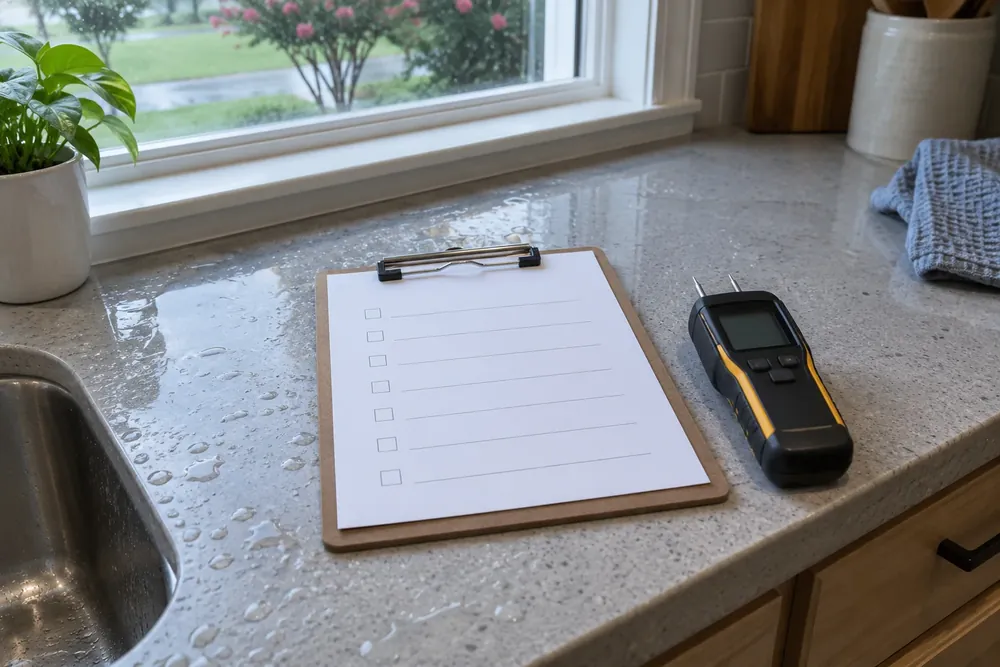
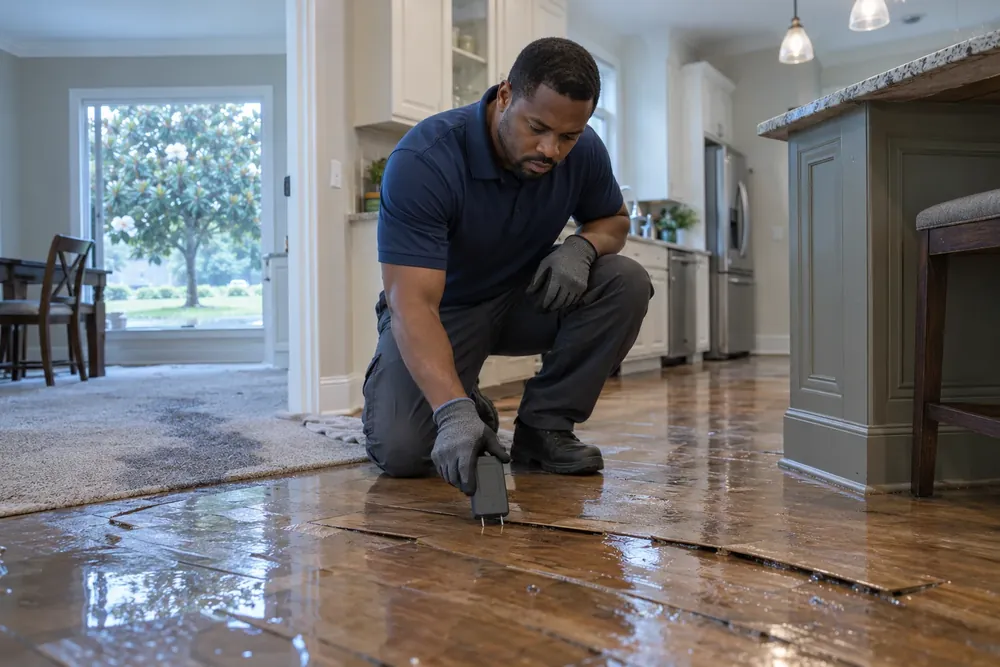
- Initial moisture assessment: Structural drying starts with readings in the affected materials. Your technician records wet locations and compares results with suitable dry areas rather than relying on the room's appearance.
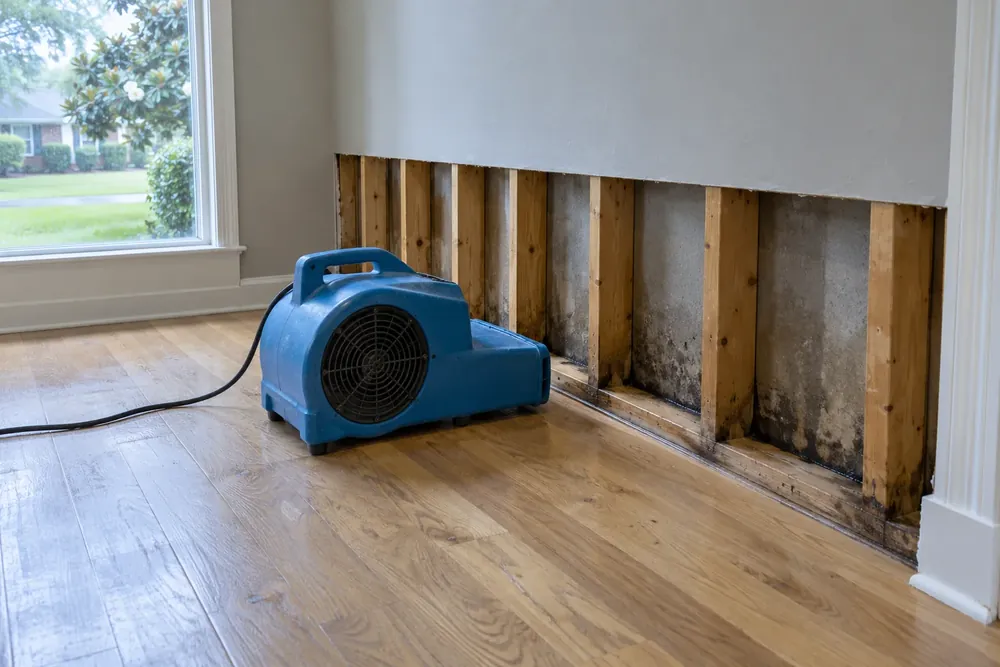
- Access to trapped moisture: Wall cavities, carpet backing, and subfloor layers are assessed for access. During water damage restoration, drywall may need openings or removal where moisture cannot be reached effectively.
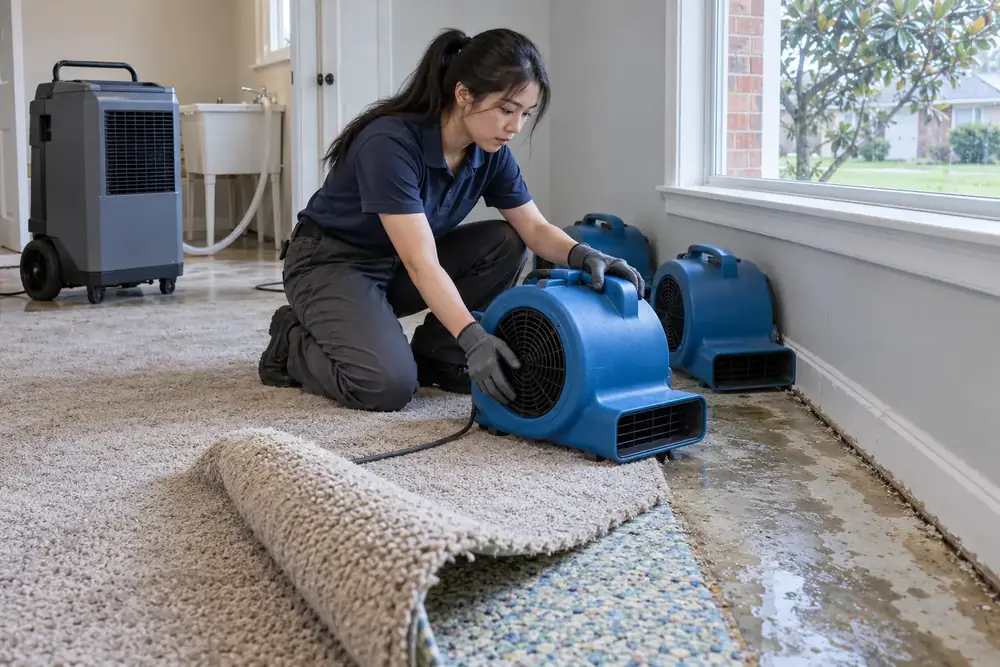
- Controlled air movement: Air movers are positioned around the materials being dried. Placement accounts for the room layout and the cleanup already completed.
- Dehumidification: A water damage dehumidifier removes moisture from the room's air as wet materials release it. Equipment selection depends on the affected volume and conditions.
- Progress checks: Repeat measurements show how the drying plan is working. Your technician adjusts equipment or access when readings show that a material remains wet.
How can I tell if visible water removal wasn't enough?
- Damp baseboards or wall edges after extraction suggest moisture remains in surrounding materials.
- Flooring that stays swollen or begins lifting needs assessment of the layers beneath it.
- A wet patch that returns after surface drying may point to trapped moisture or an ongoing leak.
- Damp framing exposed during cleanup needs measurements before the cavity is closed.
- A room that remains humid while materials feel wet warrants a drying assessment rather than repainting.
How is a drying plan checked from start to finish?
- Call and describe which materials remain damp and whether standing water has already been removed. You can share visible changes during the conversation.
- Your technician measures affected materials, checks access, and explains the drying scope and price before work starts.
- Air movers and dehumidifiers are set up after the affected area is ready for drying. Equipment placement addresses moisture in building materials as well as the room's air.
- Readings are taken again to assess progress and guide adjustments. Before water damage repair, drywall and other remaining materials need drying checks rather than a surface-only judgment.
What affects the price of structural drying in Bartlett?
The quantity of wet material, access to hidden spaces, equipment needs, and drying duration affect the price. A damp room with exposed framing has a different scope from moisture enclosed beneath several flooring layers.
Your technician outlines the measured wet areas, proposed equipment, and charges before drying begins. Discuss whether removal and replacement finishes are separate from the drying scope. Water damage drywall repair cost depends partly on how much material must be removed and replaced; drying alone doesn't restore a damaged finish. The restoration pricing guide explains the distinction between moisture removal and rebuilding.
Why call when the room already looks dry?
- Local technicians assess moisture inside affected materials, including walls or floors that look dry on the surface.
- Calls answered 24/7 let you report lingering dampness whenever you notice it, including after visible water disappears.
- Equipment needs and the proposed drying price are described before the agreed work starts.
- A moisture record, photographs, and a written scope document the work for insurance.
- Drying requests cover Bartlett, Germantown, Collierville, Lakeland, Arlington, Millington, Atoka, and Oakland.
Can I run fans against every wet wall?
Fans should only run where electrical conditions are safe and air movement won't spread contamination. Call about wet walls without starting equipment in an unsafe area.
EPA flood cleanup guidance cautions against starting fans before visible mold has been addressed and against using a flood-affected heating or cooling system. Tell your technician about dirty water, visible growth, or wet vents from a safe viewing position. Don't move equipment or unplug cords where floors or outlets are wet. Keep drain tubing and cables out of walking routes, and follow the placement instructions given for the drying setup.
Where does this safety information come from?
Which other water damage problems might I have?
Which towns around Bartlett can I call from?
In Bartlett, Germantown, Collierville, Arlington, Lakeland, Millington, Atoka, Oakland, Olive Branch, MS, Southaven, MS, Horn Lake, MS, West Memphis, AR, and Marion, AR, our local water damage professionals assess lingering moisture and plan drying around the materials affected.
What do people ask about structural drying & dehumidifying?
What does structural drying do after water extraction?
Structural drying removes moisture retained in building materials after standing water has been extracted. Your technician measures affected wood, wall assemblies, and flooring layers, then plans air movement and dehumidification around those findings. Extraction and drying address different parts of the damage, so a floor without puddles may still need attention.
At what humidity does mold grow?
Mold growth depends on moisture at a surface, so room humidity alone cannot establish whether a wet wall is safe. EPA recommends keeping indoor relative humidity below 60 percent, ideally between 30 and 50 percent. Wet materials still need direct assessment even when the room's humidity falls within that range.
Will one household dehumidifier dry the whole affected room?
A household dehumidifier may reduce room humidity, but its capacity and placement may be insufficient for wet building materials. Your technician assesses the affected area, hidden layers, and moisture readings to select a drying setup. Air movement, access, and water removal matter alongside dehumidification; an empty collection tank doesn't establish that a wall is dry.
How do you decide when drying equipment can stop?
Drying equipment can stop when measurements show that the materials being treated have reached the drying goals established for the job. Your technician checks the affected locations and records results rather than choosing an end date from appearance alone. The drying time guide explains why access and material thickness affect progress.
Does drying include replacing damaged drywall or flooring?
Drying and replacement are separate tasks, and the written scope should identify which are included. Some materials can remain after drying; others may need removal because of contamination, swelling, or loss of integrity. Your technician explains those decisions before the affected surfaces are closed or refinished, with repair work identified separately.
Call about walls or floors that still feel damp, and describe where moisture remains after the visible water is gone.
Call (901) 909-0080